

Vietnam’s economy in 2025 and outlook for 2026
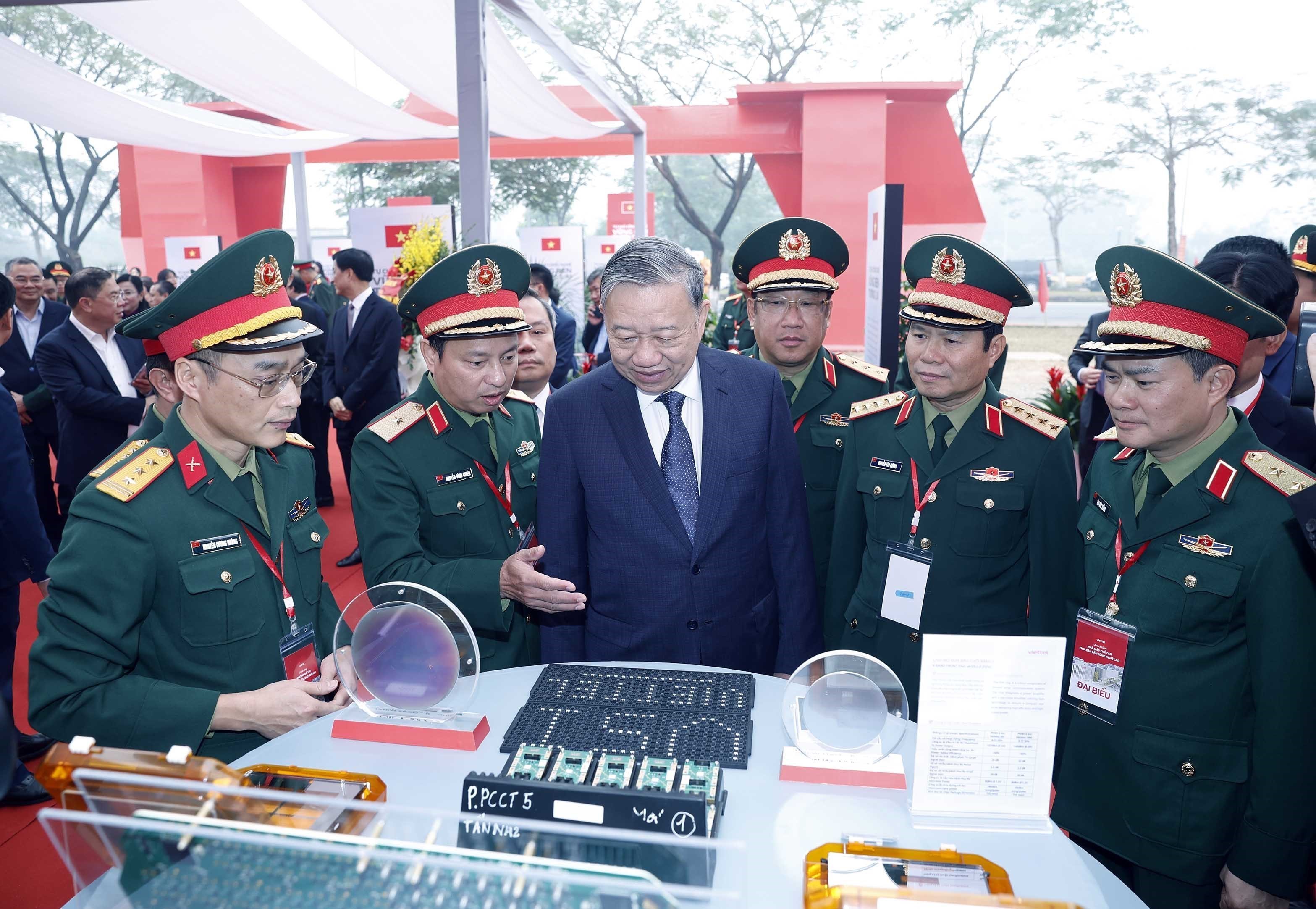
Party General Secretary To Lam attends the groundbreaking ceremony for the construction of Vietnam’s first semiconductor manufacturing plant, developed by the Military Industry-Telecoms Group (Viettel). Photo: Vietnam News Agency
Communist Review – The global economy in 2025 experienced its highest level of uncertainty since the COVID-19 pandemic and faced numerous challenges: low growth, weak trade, subdued investment and low confidence. Meanwhile, despite cautious forecasts at the beginning of the year and amid global economic volatility, Vietnam achieved an impressive “double success” in 2025: Gross domestic product (GDP) growth reached 8.02%, while GDP per capita recorded a new benchmark. These achievements provide a solid foundation and momentum for the country’s growth in the years ahead.
Impressive growth
GDP growth exceeds the target
According to data from the National Statistics Office of Vietnam under the Ministry of Finance, GDP recorded robust growth in 2025, expanding by 8.02% compared with the previous year. Of the total increase in value added across the economy, the agro-forestry-fisheries sector grew by 3.78%, contributing 5.30%; industry and construction expanded by 8.95%, contributing 43.62%; and services rose by 8.62%, contributing 51.08%.
The main growth drivers were the strong recovery of industrial production, booming exports and effective disbursement of public investment capital. At the same time, the size of the economy (nominal GDP) reached 514 billion USD. Notably, GDP per capita in 2025 stood at approximately 5,026 USD (a sharp increase from around 4,300 USD in 2023 and 4,600 USD in 2024). This figure reaffirms Vietnam’s position among upper-middle-income countries and provides momentum towards achieving the goal of becoming a developed nation by 2045.
This remarkable growth was not merely the outcome of a single year, but rather the result of the combined effects of multiple long-term strategic factors. The year 2025 witnessed the near completion of the Eastern section of the North-South Expressway and the commissioning of a series of key infrastructure projects, opening up new areas for development and reducing logistics costs for businesses. Vietnam continued to be a leading destination for high-quality foreign direct investment (FDI), particularly in semiconductors, artificial intelligence (AI) and green energy. Based on these achievements, many international financial and credit institutions, including the World Bank (WB) and the Asian Development Bank (ADB), assessed that in 2025, Vietnam’s economy had not only recovered but had genuinely entered a new growth cycle driven by quality and efficiency. Reaching the threshold of 5,026 USD per capita is clear evidence of successful economic restructuring and the growing strength of the middle class.
The economy’s growth drivers remain positive (consumption, exports and investment)
First, consumption, services and tourism
According to the National Statistics Office of Vietnam, total retail sales of consumer goods and services in 2025 were estimated to have increased by 9.2% compared with the previous year, including a 14.6% rise in accommodation and food service revenues and a 20.2% increase in travel and tourism revenues(1). Total retail sales of consumer goods and services at current prices reached approximately 7 quadrillion VND (about 266 billion USD) in 2025, up 9.2% year-on-year (compared with 8.9% growth in 2024).
Excluding price factors, the increase was 6.7%, equivalent to the growth rate recorded in 2024. Revenue from accommodation and food services reached nearly 843.1 trillion VND (about 32 billion USD), accounting for 12.0% of the total and rising by 14.6% compared with the previous year. Travel and tourism revenues amounted to approximately 93.9 trillion VND (about 3.6 billion USD), accounting for 1.4% of the total and increasing by 20.2% year-on-year. These results stemmed from the restructuring of tourist markets, diversification of tourism products, innovation in promotion and marketing activities, and especially the implementation of increasingly open visa policies that help attract both domestic and international visitors.
Second, exports maintaining growth momentum despite the impact of policies adopted by major economies
Despite global economic headwinds, Vietnam’s trade sector in 2025 reached a historic milestone, with total import-export turnover reaching a record 920 billion USD, up 16.9% (equivalent to an increase of 133.71 billion USD) compared with 2024.
Booming exports were the primary growth driver, reaching 470.59 billion USD, up 15.9%. This breakthrough not only reflected strong domestic production capacity but also demonstrated the effective utilisation of Free Trade Agreements (FTAs). Maintaining double-digit growth serves as evidence of the strong competitiveness of Vietnamese products in international markets, ranging from agricultural goods to high-tech industrial products.
On the import side, turnover reached 449.41 billion USD, up 18%, mainly concentrated in raw materials and production inputs, indicating a strongly expanding production cycle. In particular, maintaining a trade surplus of 21.18 billion USD was highly significant, helping stabilise exchange rates, increase foreign exchange reserves, and strengthen the confidence of foreign investors.
Third, investment continuing to improve
According to a report by the Ministry of Finance, total realised social investment in 2025 at current prices reached approximately 4.15 quadrillion VND (about 158 billion USD), up 12.1% compared with 2024, significantly higher than the 7.8% growth recorded in the previous year.
Realised FDI in Vietnam reached approximately 27.62 billion USD in 2025, up 9.0% year-on-year and the highest level in the past five years. Total realised social investment included state-sector investment of 1.23 quadrillion VND (about 47 billion USD), accounting for 29.7% of the total and increasing by 19.7%; non-state investment of 2.23 quadrillion VND (about 85 billion USD), accounting for 53.9% and rising by 8.4%; and FDI-sector investment of 679.8 trillion VND (about 26 billion USD), accounting for 16.4% and growing by 11.7%.
Regarding public investment capital, realised State budget-funded investment in 2025 reached approximately 850.7 trillion VND (about 32 billion USD), equivalent to 83.6% of the annual plan and up 26.6% compared with the previous year(2). By management level, centrally managed capital reached 118.4 trillion VND (about 4.5 billion USD), equivalent to 80.5% of the annual plan and up 6.2% year-on-year, while locally managed capital reached 732.3 trillion VND (about 28 billion USD), equivalent to 84.1% of the plan and up 30.6%.
Within locally managed capital, provincial-level state budget investment amounted to 600.7 trillion VND (about 23 billion USD), equivalent to 83.6% of the plan and up 36.3%, while commune-level state budget investment reached 131.6 trillion VND (about 5 billion USD), equivalent to 86.6% of the plan and up 9.9%.
Transport infrastructure investment in 2025 made significant progress as numerous major road, maritime and aviation projects were implemented and completed, thereby opening up new areas of development and enhancing economic connectivity.
By the end of 2025, the country had completed 3,345 km of main expressway routes and 458 km of interchanges and access roads, bringing the total length of expressways and related facilities to 3,803 km.
In addition to expressways, Vietnam completed 1,586 km of national highways and 1,701 km of coastal roads. During the 2021-2025 period as a whole, a total of 2,025 km of expressways were completed and put into operation. In 2025 alone, the country completed 1,491 km of expressways, 456 km of national highways and 251 km of coastal roads, while continuing construction of the Ca Mau - Cai Nuoc Expressway, cross-regional routes such as Tan Phu - Bao Loc and Quy Nhon - Pleiku, and the Dat Mui - Hon Khoai Port transport corridor. As a result, the expressway network has gradually formed a continuous national backbone, reducing transport times, lowering logistics costs and strengthening linkages between economic centres, industrial zones, seaports and airports, thereby creating room for the restructuring of development space towards a multi-polar development model.
The aviation sector also recorded several important milestones in 2025. Terminal T3 at Tan Son Nhat International Airport was put into operation, adding capacity for approximately 20 million passengers annually. The expansion project of Terminal T2 at Noi Bai International Airport was completed, increasing international terminal capacity to 15 million passengers per year. Notably, on December 19, 2025, Long Thanh International Airport conducted its first technical flight, completing the key components of Phase 1 and preparing for commercial operations from 2026 onwards, thereby gradually easing pressure on the country’s major aviation gateways.
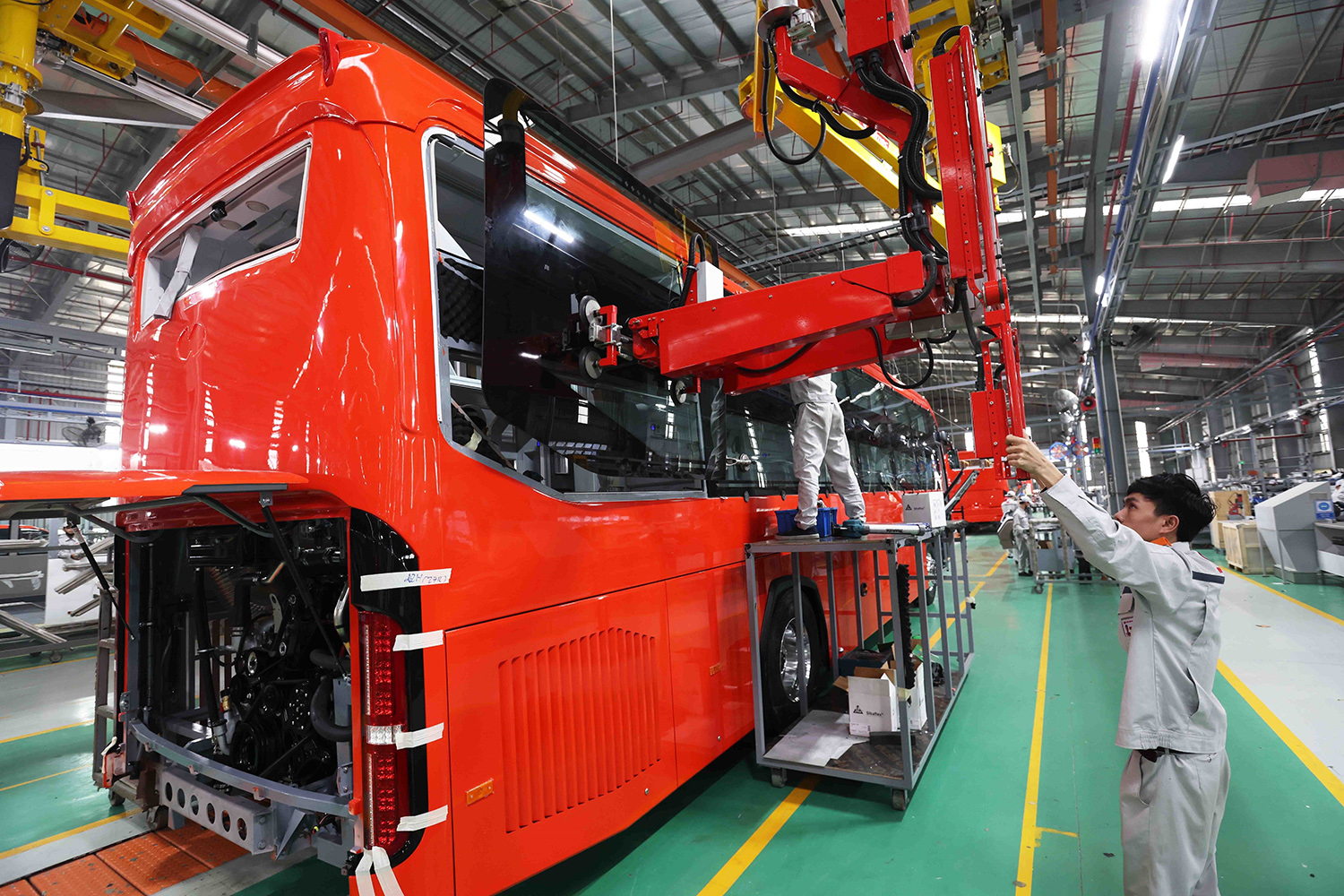
Bus assembly line at the factory of Kim Long Motor Hue Joint Stock Company. Photo: Vietnam News Agency
Foreign direct investment continuing to grow positively: According to the Foreign Investment Agency under the Ministry of Finance, realised foreign investment in 2025 reached approximately 27.62 billion USD, up 9.0% compared with the previous year. Of this amount, manufacturing and processing attracted 22.88 billion USD, accounting for 82.8% of total realised FDI; real estate received 1.93 billion USD, accounting for 7.0%; and electricity, gas, hot water, steam and air-conditioning production and distribution attracted 914.9 million USD, accounting for 3.3%.
Business climate shows strong improvement
According to a report by the Agency for Private Enterprise and Cooperative Economic Development under the Ministry of Finance, the issuance of Politburo Resolution No. 68-NQ/TW dated May 4, 2025, on private economic development, with a range of breakthrough policies, opened up new development opportunities for businesses. As a result, the private sector in general and the business community in particular achieved unprecedented breakthroughs, with business confidence and momentum reaching record highs. This was evidenced by a surge in the number of newly established enterprises and firms resuming operations, as well as the setting of record numbers of business start-ups for the first time. The number of enterprises entering the market reached 297,500, up 27.4% compared with the previous year and 1.3 times the number of enterprises exiting the market. Of these, nearly 195,100 newly registered enterprises were established with total registered capital of 1.92 quadrillion VND (approximately 73 billion USD), representing increases of 24.1% in both the number of enterprises and registered capital. In addition, more than 102,300 enterprises resumed operations, up 34.3% compared with 2024.
This was a record increase, clearly reflecting the vitality, dynamism and growing business confidence of the business community.
Total additional registered capital injected into the economy in 2025 reached nearly 6.4 quadrillion VND (about 243 billion USD), up 77.8% compared with 2024, including more than 4.4 quadrillion VND (about 167 billion USD) in additional registered capital from operating enterprises, an increase of 118.3%.
The increase in investment capital indicates that operating enterprises perceive significant business opportunities and market potential. To date, the number of active enterprises nationwide has surpassed one million, affirming the increasingly important role of the business sector in the economy. Beyond reflecting numerical growth, these results also indicate a certain degree of recovery in the production and business environment and provide an important basis for assessing the confidence and expectations of the business community amid continued domestic and international economic uncertainties.
Macroeconomic stability is maintained, with stable inflation and interest rates supporting growth
The average consumer price index (CPI) in 2025 increased by 3.31% compared with 2024, meeting the target set by the National Assembly, mainly due to the following factors: 1- The housing, electricity, water, fuel and construction materials price index contributed 1.38 percentage points; 2- The food and catering services price index contributed 1.17 percentage points; 3- The pharmaceutical products and healthcare services price index contributed 0.61 percentage points as healthcare service prices were adjusted in accordance with Circular No. 21/2024/TT-BYT dated October 17, 2024, issued by the Ministry of Health; 4- The prices of other goods and services contributed 0.17 percentage points; 5- The education price index contributed 0.13 percentage points due to tuition fee adjustments at several private universities, private secondary schools and private preschools. On average, core inflation in 2025 increased by 3.21% compared with the previous year, lower than the average CPI increase of 3.31%, mainly because food prices, electricity prices, healthcare service charges and education service fees contributed to CPI growth but are excluded from the basket used to calculate core inflation.
According to the State Bank of Vietnam, as of December 31, 2025, total outstanding credit across the banking system reached 18.58 quadrillion VND (about 707 billion USD), up 19.01% compared with the end of 2024. In absolute terms, total credit in the system increased by 2.97 quadrillion VND (about 113 billion USD) during 2025 compared with the previous year. However, greater attention should be paid to expanding credit packages for priority sectors, such as the 145 trillion VND (about 5.5 billion USD) credit package for social housing and housing for people under 35 years of age, as well as the 500 trillion VND (about 19 billion USD) credit programme for infrastructure and digital technology investment.
Creating new growth drivers
The year 2025 marked an important turning point in Vietnam’s modernisation and financial integration process with the issuance of National Assembly Resolution No. 222/2025/QH15 on the International Financial Centre in Vietnam. This was not only an institutional landmark, but also reflected a long-term vision aimed at enhancing the mobilisation and allocation of financial resources to support rapid and sustainable growth during the 2026-2030 period. Located in Ho Chi Minh City and Da Nang city, the International Financial Centre is designed to develop a modern, competitive and transparent financial ecosystem in line with international standards. The Resolution introduces numerous exceptional and breakthrough mechanisms and policies to encourage and facilitate the attraction of capital, technology, modern management practices, high-quality human resources and infrastructure development to the International Financial Centre. At the same time, it lays the groundwork for the establishment of an independent credit rating system, high-quality auditing services and an integrated financial database - essential elements for reducing risks and enhancing the credibility of Vietnam’s financial market. In this regard, the adoption of the Resolution not only demonstrates a strong commitment to reform, but also creates a new position for Vietnam on the regional and global financial map in the coming decade.
In addition, the National Assembly adopted resolutions providing supplementary special mechanisms and policies for localities. It also established a unified policy framework for three Free Trade Zones (FTZs), created to pilot exceptional and breakthrough mechanisms and policies in Hai Phong city, Da Nang city and Ho Chi Minh City. This is considered an important foundation for promoting the formation and development of FTZs in these localities. To accelerate the development of FTZs in Hai Phong, Da Nang and Ho Chi Minh City, a number of outstanding mechanisms and policies have been designed. Local authorities are granted autonomy in selecting strategic investors; enterprises operating within FTZs are entitled to a corporate income tax rate of 10% for 20 years, with a four-year tax exemption and a 50% reduction for the subsequent nine years; while experts and highly skilled workers are eligible for a 50% reduction in personal income tax for 10 years.
Some short-term and long-term challenges facing the economy
According to various studies, several short- and long-term challenges facing the economy can be identified as follows:
First, external challenges remain present, including persistent and unpredictable geopolitical tensions; slower growth in major economies (such as the US and China) due to tariffs, affecting exports, FDI and tourism; inflation and interest rates, although declining, remaining elevated for an extended period, making recovery more difficult while public and private debt risks remain high; and the continuing threat of natural disasters, saltwater intrusion and extreme climate change.
Second, the degree of dependence on external factors continues to increase. In 2025, the United States remained Vietnam’s largest export market, reaching a record 151.85 billion USD, accounting for 32% of the country’s total export value and increasing by as much as 32 billion USD compared with the previous year. China remained Vietnam’s largest source of imports, with import turnover reaching 183 billion USD, accounting for approximately 41% of total imports and increasing by 39 billion USD year-on-year. The sharp rise in exports to the United States and imports from China continues to highlight structural issues in Vietnam’s trade pattern and implies significant risks, given that US-China relations are expected to remain complex in the coming period.
Third, pressure on the exchange rate and non-performing loans are rising, although both remain under control; the stock market shows signs of overheating, while foreign investors remained net sellers and the gold market was still highly volatile.


