

Enhancing physical health: A foundation for human resource development in the new era
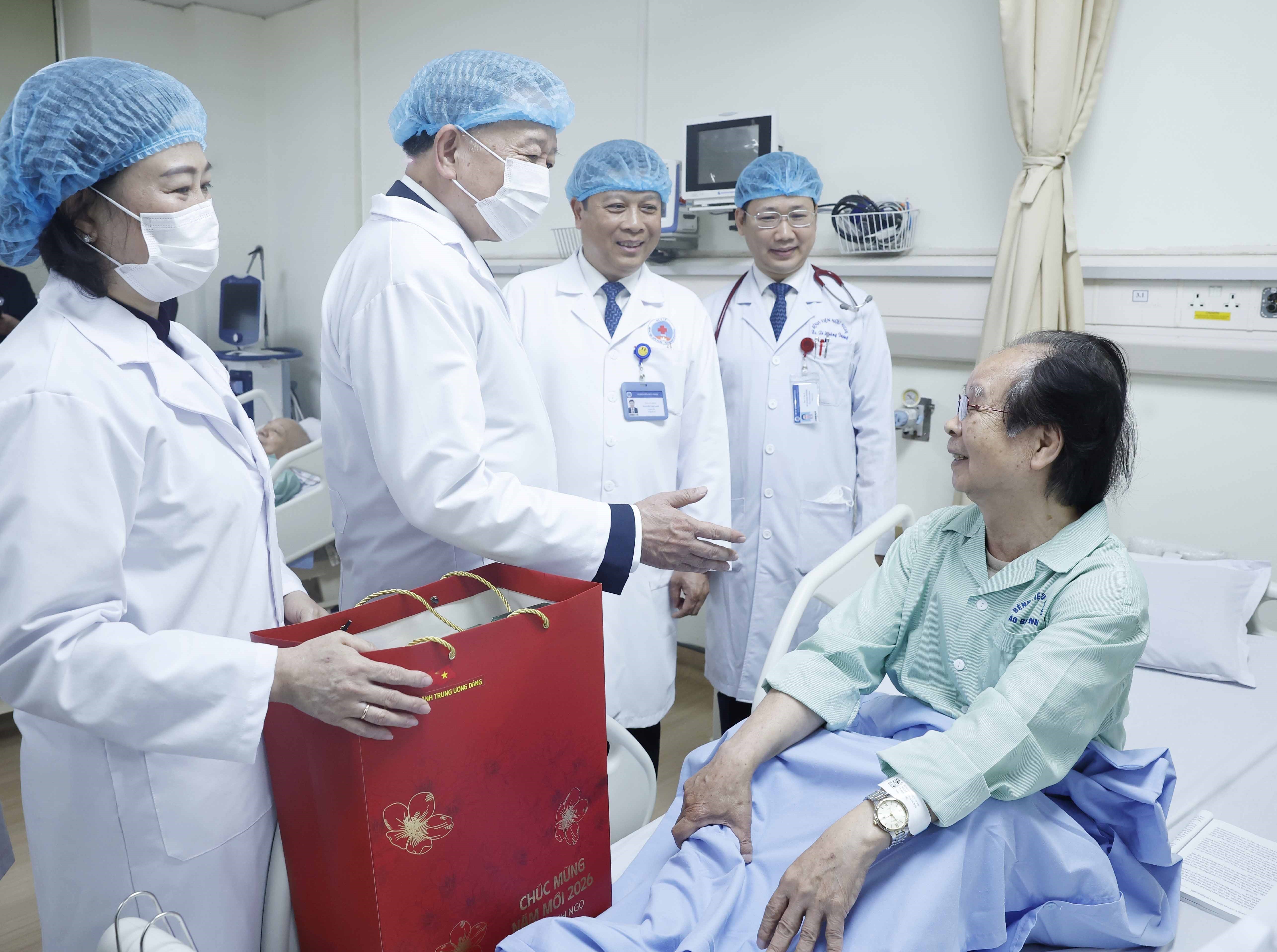
General Secretary To Lam visits and presents gifts to patients undergoing treatment at Friendship Hospital. (Photo: Vietnam News Agency)
COMMUNIST REVIEW - As the country enters a new era of development, with higher requirements for the quality of human resources, improving physical health has been identified as the direct material and biological foundation for comprehensive human development. In line with Resolution No. 20-NQ/TW(1), Resolution No. 72-NQ/TW(2), and the major orientations set out in the documents of the 14th National Party Congress, enhancing physical health has been placed at the heart of the strategy for developing a high-quality workforce. This underscores that protecting, caring for and improving public health is not solely the responsibility of the health sector, but a task of the entire political system and society as a whole. It is also a key driver of the country's rapid and sustainable development in the new period.
Enhancing physical health remains the foundation for comprehensive human development
Throughout history, people have been recognised as both the goal and the driving force of development. Comprehensive human development is a key measure of a society’s level of civilisation and progress. It is not simply the sum of individual dimensions, but the harmonious development of physical health, intellect, mental well-being, morality and social capabilities.
Within this holistic framework, physical health provides the biological and material foundation upon which intellectual capacity, creativity and social character are built and fully realised.
From the perspective of social sciences and humanities, physical health is more than a reflection of individual well-being. It is also a vital indicator of population quality, workforce productivity and national vitality. Without robust physical health, people are unlikely to meet the growing demands of a modern economy.
Likewise, lifelong learning, adaptability to environmental change, and the ability to innovate will all be constrained in the absence of good health.
Improving physical health is therefore not merely a healthcare issue. It is a development priority that is directly linked to strengthening human capital and shaping the future of the nation.
President Ho Chi Minh’s thought on human development and health carries profound theoretical and practical significance, reflecting his view that people are at the heart of the revolutionary cause. He highlighted the close relationship between individual health and national strength, stating that “Every weak citizen contributes to a weak nation; every healthy citizen contributes to a strong nation.”(3)
According to President Ho Chi Minh, physical exercise is not merely a personal need but also a duty to the nation. Good health is a prerequisite for people to work, learn, contribute to society and realise their moral values and revolutionary ideals. His perspective remains highly relevant today, particularly as Vietnam accelerates industrialisation and modernisation while deepening international integration.
Building on and further developing Ho Chi Minh’s thought, the protection, care and improvement of public health have been identified as a key, long-term and ongoing responsibility of the entire political system. This view has been consistently reflected in Party documents, particularly in the context of formulating a strategy for developing high-quality human resources.
Resolution No. 20-NQ/TW, adopted at the 12th Party Central Committee’s sixth Plenum on strengthening the protection, care and improvement of public health in the new situation, marked an important development in the Party’s thinking on healthcare and public health. It placed public health within the broader framework of sustainable development, closely linking it to socio-economic progress and improvements in the quality of human resources.
The 13th National Party Congress further emphasised that the development of high-quality human resources must go hand in hand with improving the health of the population, enhancing the stature, physical fitness and quality of life of Vietnamese people. It also reaffirmed that investment in healthcare and public health services is an investment in sustainable development.
Against this backdrop, Resolution No. 72-NQ/TW, issued by the Politburo on September 9, 2025, on a number of breakthrough measures to strengthen the protection, care and improvement of public health, reflects the Party’s comprehensive strategic commitment to public health in the new era.
The Resolution affirms that health is people’s most valuable asset and a fundamental prerequisite for individual well-being, national survival, and the country’s sustainable prosperity and development. It emphasises that healthcare is not only an objective in itself but also a driver of development. As such, it should be given priority in national development strategies and policies, while remaining the shared responsibility of the entire political system, society as a whole and every citizen.
A central feature of Resolution No. 72-NQ/TW is its call for a fundamental shift in both thinking and action in the leadership, direction and implementation of public health policies. Under this approach, healthcare and state management of healthcare are no longer viewed as a narrowly defined administrative or professional sector. Rather, they are recognised as an integral component of the broader strategy for human development and socio-economic development.
The Resolution places people at the centre of policymaking, prioritising measures to protect, care for and improve physical and mental health, as well as to enhance stature, longevity and healthy life expectancy. It aims to ensure that all citizens have full, fair and equitable access to quality healthcare services, with particular attention given to children, low-income groups and beneficiaries of social welfare policies.
Resolution No. 72-NQ/TW also calls for a decisive shift towards disease prevention and the continuous protection, care and improvement of public health throughout the entire life course. Preventive medicine, grassroots healthcare and traditional medicine are identified as the cornerstones of the healthcare system.
To this end, priority is given to comprehensive investment in human resources, facilities and equipment for commune-level health stations, with the goal of strengthening primary healthcare services, enabling early disease detection and improving community health management at the grassroots level. These measures are expected to reduce pressure on higher-level healthcare facilities while enhancing the overall effectiveness of disease prevention, treatment and health promotion.
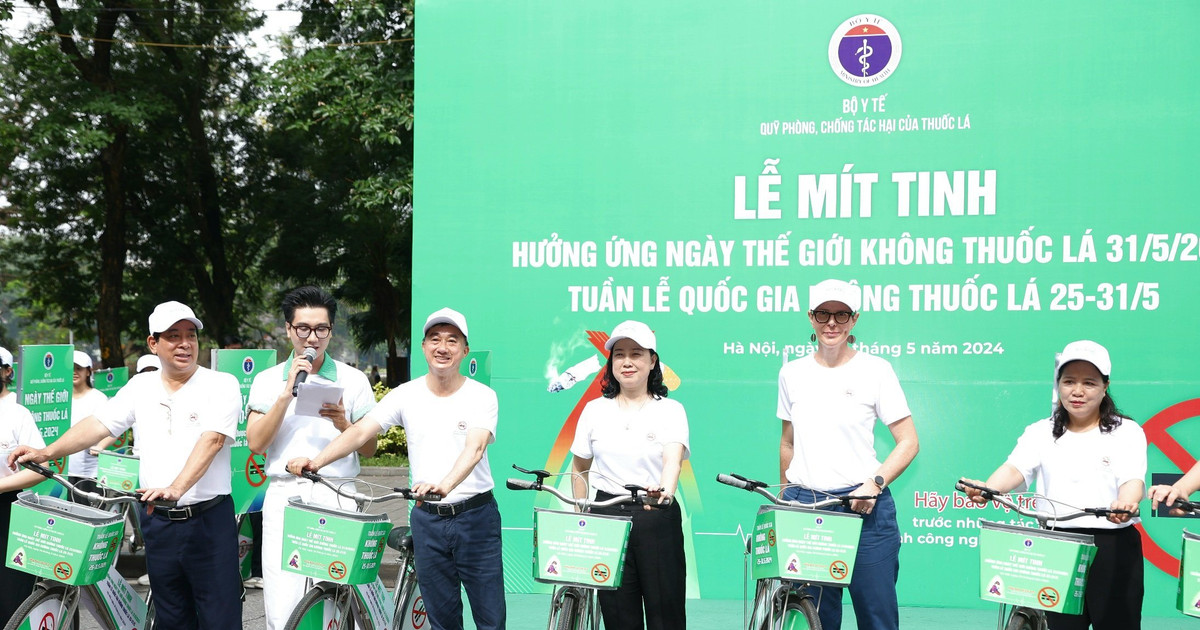
Ministry of Health officials participate in a cycling event supporting a tobacco harm reduction campaign. (Photo: baodautu.vn)
In addition, the Resolution calls for further improvements to the institutional framework, more effective mobilisation and use of resources, greater application of science and technology, and accelerated digital transformation. It also emphasises the need for healthcare financing reforms to ensure the efficiency and long-term sustainability of health insurance and related financial mechanisms.
The targets set for 2030 aim to create a healthier living environment, with health indicators and coverage of essential healthcare services approaching the level of more advanced countries in the region. They also seek to increase both life expectancy and healthy life expectancy, while building a modern, equitable, efficient and sustainable healthcare system that prioritises disease prevention.
As Vietnam enters a new phase of rapid and sustainable development, marked by deeper international integration, it must also contend with population ageing, the rising burden of non-communicable diseases and the multifaceted impacts of climate change. These challenges place increasingly comprehensive and demanding requirements on the country's human resources.
The transition to a growth model driven more by knowledge, science, technology and innovation requires a workforce that is healthy in both body and mind. Physical health can therefore no longer be understood merely as the absence of disease. Rather, it should be viewed as a positive and resilient state of well-being, characterised by the capacity to withstand, adapt to and recover from economic, social and environmental shocks.
Enhancing physical health has thus become the direct biological and material foundation of high-quality human resources and a prerequisite for achieving the country's development goals in the new era.
Drawing on the theoretical foundations of Marxism–Leninism, Ho Chi Minh Thought, and the Party’s strategic policies as articulated in Resolution No. 20-NQ/TW, Resolution No. 72-NQ/TW and the major orientations set out by the 13th National Party Congress, it can be affirmed that improving physical health is a fundamental prerequisite for comprehensive human development. It is a decisive factor in enhancing the quality of human resources and a key driver of the country's rapid and sustainable development.
Strategy for protecting and caring for public health: From policy to action
Resolution No. 20-NQ/TW, adopted by the 12th Party Central Committee, marked a fundamental shift in the Party’s thinking on healthcare – from a model focused primarily on medical examination and treatment to a people-centred approach that places disease prevention, health protection and health promotion at its core. This strategic adjustment reflects a more comprehensive understanding of the relationship between public health and the country’s sustainable development.
As Vietnam simultaneously faces the dual burden of disease, rapid population ageing and the increasingly profound impacts of climate and environmental change, this approach not only aligns with modern healthcare trends but also responds directly to pressing practical challenges.
In this context, improving physical health is no longer viewed as a purely professional matter of the healthcare sector. Rather, it has become a central pillar underpinning the entire system of human development policies.
Physical health is intrinsically linked to population, education, sports, employment and social welfare policies. It is shaped by a combination of factors, including living conditions, the social environment, nutrition, levels of physical activity and access to basic healthcare services.
Healthcare, therefore, extends far beyond hospitals and medical facilities. It begins within families, schools, communities and the broader living environment. Protecting and improving public health is not solely the responsibility of the healthcare sector; it is a shared task of the entire political system and society as a whole.
The documents of the 13th National Party Congress emphasise the goal of building a developed Vietnam in which its people possess good health, intellectual capacity, resilience, a strong aspiration for development and a high sense of social responsibility.
To realise these objectives, health policy must go beyond ensuring access to medical examination and treatment services. It needs to place greater emphasis on improving physical health from the earliest stages of the human life course – from maternal and child healthcare to enhanced nutrition and physical education in schools, and the promotion of healthy lifestyles throughout adulthood, leading towards healthy ageing.
This preventive, health-promoting approach, which addresses health at its root, lays the foundation for reducing the long-term burden of disease and improving overall quality of life for the population.
Recently, strategic guidance and conclusions from the General Secretary following meetings with the Party Committee of the Government and relevant ministries and sectors have further reinforced a consistent perspective: the protection, care and improvement of public health is both a goal and a driving force of rapid and sustainable development. Health must be given top priority in all development strategies and policies, and regarded as one of the most important political tasks.
The orientation towards researching and designing breakthrough solutions for public healthcare demonstrates the Party’s strong political commitment to removing bottlenecks in institutions, resources and implementation mechanisms, with a focus on achieving concrete, measurable outcomes that can be monitored.
On this basis, Resolution No. 72-NQ/TW of the Politburo has further concretised the people-centred approach to healthcare development. The Resolution affirms that health is people’s most valuable asset, the foundation of individual well-being, social development and national strength. It also emphasises the need to shift decisively towards proactive healthcare, in which preventive medicine, primary healthcare and the improvement of community health serve as the pillars of the national health system. Accordingly, the design of health policy must be integrated, coordinated and cross-sectoral, ensuring systemic coherence, continuity and equitable access.
From the perspective of human resource development, health policy should be designed to integrate the objective of improving physical health with enhancing labour productivity, educational quality, the effectiveness of social welfare and national competitiveness. A healthy workforce not only helps reduce long-term healthcare costs and social welfare burdens, but also directly improves productivity, creativity, flexibility and adaptability in the context of digital transformation, green transition and deeper international integration.
This approach demonstrates that improving physical health is not merely a form of welfare expenditure. Rather, it is a strategic investment in development and a crucial condition for realising the country’s goals of rapid and sustainable growth in the new era.
Thus, from the perspective of Resolution No. 20-NQ/TW to the orientations and breakthrough solutions set out in Resolution No. 72-NQ/TW, there is a clear consistency and further development in the Party’s thinking on the role of physical health improvement within the strategy for protecting and caring for public health.
Enhancing physical health therefore becomes a crucial link between healthcare policy and the goal of developing high-quality human resources, thereby contributing to strengthening the foundations for the country’s sustainable development.
Improving the quality of human resources: A sustainable foundation for national construction and defence
In practice, the improvement of physical health can only be achieved sustainably when it is implemented in a coordinated manner, under the unified leadership of the Party, with effective and efficient state management, and with the active and proactive participation of society as a whole.
This is not only a matter of organising and implementing health policy, but also a profound socio-political issue directly linked to the strategy for human development and the consolidation of national strength. In the coming period, the key task is to further concretise and effectively implement the viewpoints and objectives set out in Resolution No. 20-NQ/TW, Resolution No. 72-NQ/TW of the Politburo, and the orientations laid down in the documents of the 14th National Party Congress.
At the same time, it is necessary to continue improving the political, legal and resource conditions in order to introduce new breakthroughs in the protection, care and enhancement of public health.
First, it is necessary to further enhance the political awareness and responsibility of Party committees, Party organisations and authorities at all levels regarding the foundational role of physical health in human development and national progress.
The improvement of public health should be regarded as a core component of development policy, and must be substantively integrated into socio-economic development strategies, master plans and plans at all levels. It should be closely linked to specific objectives, targets, resources, and monitoring and evaluation mechanisms, thereby overcoming the tendency to confine implementation to specialised programmes or campaign-style initiatives.
Second, there should be a consistent focus on shifting the emphasis towards proactive healthcare, in which disease prevention, physical health promotion and lifelong health management are considered central to the health system. Within this framework, preventive medicine, primary healthcare and community-based health promotion play a pivotal role as the frontline of public health protection.
Investment in improving physical health is an investment in the future. It carries not only humanitarian significance but also delivers long-term socio-economic benefits, including reducing the burden of disease, lowering healthcare and social welfare costs, increasing healthy life expectancy, and improving the quality of human resources and labour productivity.
Third, it is necessary to build a healthy living environment that creates favourable conditions for people to engage in physical exercise and sustain positive lifestyles. Physical health is not determined solely by healthcare services, but is directly influenced by living conditions, as well as the natural and social environment. Therefore, improving physical health requires a strong intersectoral coordination mechanism involving health, education, culture and sports, construction, transport, environment, information and communications, and socio-political organisations.
The development of public spaces and grassroots cultural and sports facilities, ensuring food safety, controlling health risk factors, and promoting physical activity within communities are among the key areas that must be addressed in a coordinated manner in policy planning and implementation.
Fourth, it is important to strengthen the role of every citizen in protecting and improving their own health. Each individual should clearly recognise that safeguarding and enhancing personal health is not only a right but also a responsibility to their family, society and the nation. This awareness should be translated into voluntary and sustained action by both individuals and communities.
A culture of physical exercise, healthy lifestyles and proactive disease prevention should be regarded as an essential component of building well-rounded Vietnamese people in the new era.
In a context where opportunities and challenges are intertwined, improving the people’s physical health has significance that goes beyond the health sector, becoming a key factor in ensuring the nation’s strength.
A nation whose people possess good physical fitness and endurance will be better equipped to withstand economic, social, environmental and non-traditional security challenges, while also providing a solid foundation for building an independent, self-reliant economy and for deep international integration.
Improving physical health not only contributes to enhancing the quality of life of the people, but also directly strengthens national potential and overall national strength, effectively serving the cause of building and firmly defending the Socialist Republic of Vietnam in the new stage of development./.
===
1) Resolution No. 20-NQ/TW dated October 25, 2017, of the 12th Party Central Committee's 6th Plenum, “on strengthening the protection, care and improvement of public health in the new situation”.
2) Resolution No. 72-NQ/TW dated September 9, 2025, of the Politburo, “on a number of breakthrough solutions to strengthen the protection, care and improvement of public health.”
3) Ho Chi Minh: Complete Works, National Political Publishing House, Hanoi, 2011, Vol. 4, p. 240.


