

Cultural diplomacy: Promoting Vietnam’s national identity, core values, and image globally in the new era
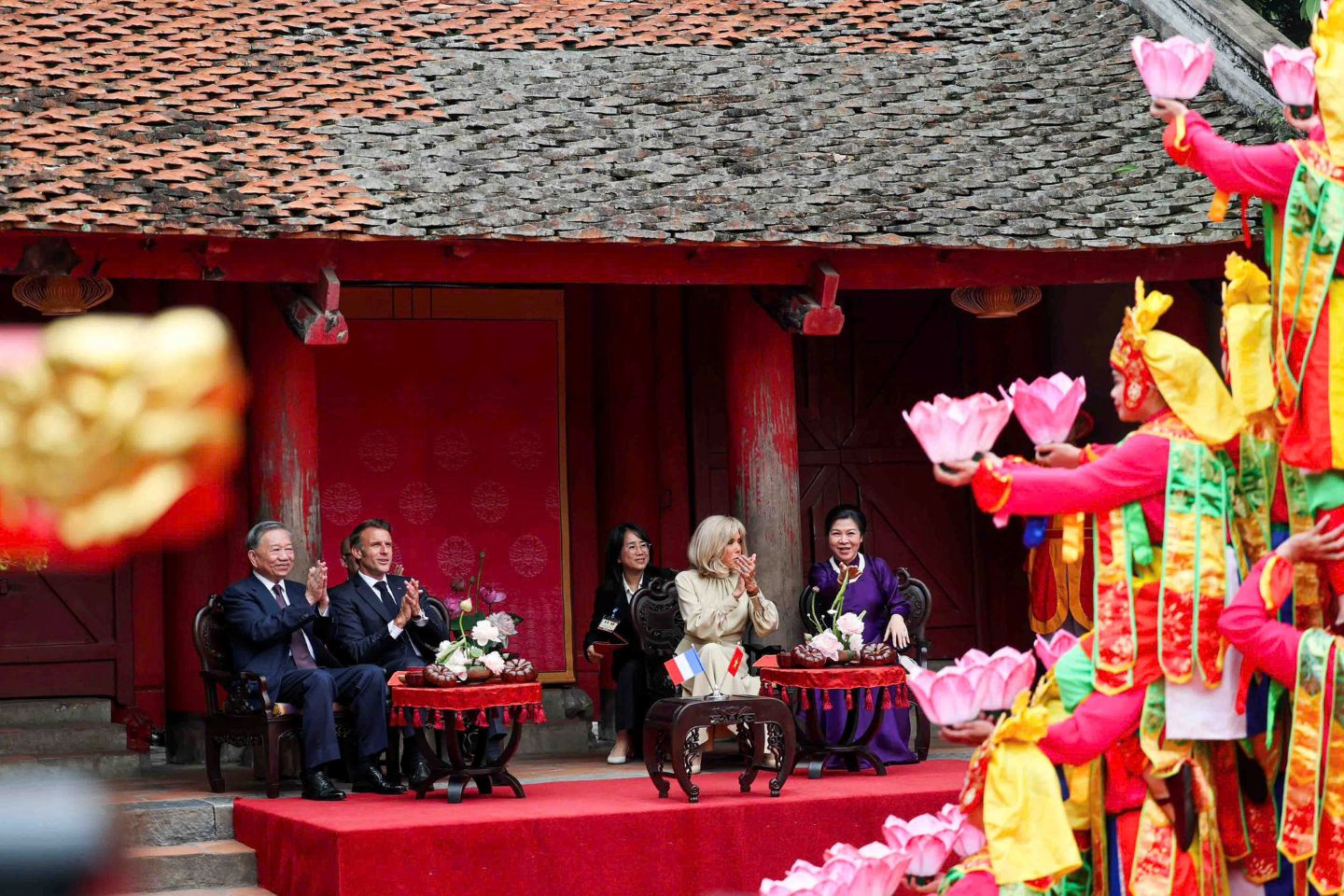
General Secretary To Lam and his spouse, together with French President Emmanuel Macron and his spouse, enjoy a performance of Hue Royal Court Music, May 26, 2025. Photo: baovanhoa.vn
Communist Review - After four decades of Doi Moi (Renewal) and intensive and extensive international integration, the further promotion of national identity, fine values, and the image of Vietnam, its land and people on the international stage has become a strategic imperative. The Communist Party of Vietnam and the Vietnamese State regard diplomacy as one of the key pillars for safeguarding the Fatherland early and from afar. Within this framework, cultural diplomacy, together with political diplomacy and economic diplomacy, forms three pillars of external relations activities. Cultural diplomacy serves not only as a means of implementing the country's foreign policy but also as a means of promoting national identity, fine values, and the image of Vietnam and its land and people to international friends.
Concept and role of cultural diplomacy
In contemporary international relations theory, cultural diplomacy is generally considered part of public diplomacy, emphasising the use of cultural instruments, products, and activities to build trust, foster goodwill, and promote mutual understanding among nations. While traditional diplomacy focuses primarily on state-to-state channels, cultural diplomacy expands the sphere of engagement to people-to-people and society-to-society interactions, targeting broader audiences abroad.
Cultural diplomacy is commonly understood as the use of creative expression, exchanges of ideas and information, and cultural interactions to enhance mutual understanding, foster friendship and cooperation, and simultaneously promote a nation's identity, core values, and image to the international community. Culture in this context encompasses not only heritage, festivals, and the arts, but also lifestyles, value systems, behavioural norms, cuisine, contemporary creativity, and cultural industry products. Cultural diplomacy is not a one-way activity; rather, it is a process of reciprocal exchange and interaction. Through this process, countries gain greater understanding of, and access to, the outstanding cultural values and humanity’s cultural achievements, enriching their own cultural heritage while guiding the preservation, promotion, and adaptation of their cultural values in line with global development trends.
Cultural diplomacy is closely associated with the concept of “soft power”, namely the ability to attract and persuade rather than coerce or compel. Through culture, values, and development models that earn the appreciation of the international community, a country gains more favourable conditions for conducting political, economic, security, and defence diplomacy more effectively. In other words, cultural diplomacy plays an important role in advancing diplomacy in other fields, including economic, political, defence, and security. It not only strengthens mutual understanding among nations but also helps “soften” political tensions and create an environment conducive to cooperation and development.
Vietnamese values can be understood from a range of perspectives. From a socio-cultural standpoint, they represent a system of values that has been formed and refined over the country’s long history of nation-building and defence, as well as through labour, creativity and international integration.
Within this framework, several key groups of values are commonly identified.
Historical and revolutionary values are reflected in the spirit of independence and self-reliance, resilience and indomitable will, as well as strong patriotism that consistently places national interests above all else.
Cultural and spiritual values are expressed through compassion and tolerance, traditions of solidarity and mutual support, a strong sense of community rooted in village culture, and a commitment to harmony and love of peace.
Human values are demonstrated in diligence, creativity, flexibility and resourcefulness, alongside a strong sense of loyalty and compassion, high regard for family and learning, and respect for teachers and moral principles.
The image of Vietnam and its people reflects how the country is perceived, experienced, and evaluated by international friends. This image is shaped by a wide range of factors, including history, geography, political institutions, socio-economic achievements, people, culture, heritage, lifestyle, and scientific and technological development. A national brand represents the purposeful “integration” of these elements into a coherent narrative, core message, and consistent image, making Vietnam more recognizable internationally.
Vietnamese values can be understood from a range of perspectives. From a socio-cultural standpoint, they represent a system of values that has been formed and refined over the country’s long history of nation-building and defence, as well as through labour, creativity and international integration.
Within this framework, several key groups of values are commonly identified.
Historical and revolutionary values are reflected in the spirit of independence and self-reliance, resilience and indomitable will, as well as strong patriotism that consistently places national interests above all else.
Cultural and spiritual values are expressed through compassion and tolerance, traditions of solidarity and mutual support, a strong sense of community rooted in village culture, and a commitment to harmony and love of peace.
Human values are demonstrated in diligence, creativity, flexibility and resourcefulness, alongside a strong sense of loyalty and compassion, high regard for family and learning, and respect for teachers and moral principles.
The image of Vietnam and its people reflects how the country is perceived, experienced, and evaluated by international friends. This image is shaped by a wide range of factors, including history, geography, political institutions, socio-economic achievements, people, culture, heritage, lifestyle, and scientific and technological development. A national brand represents the purposeful “integration” of these elements into a coherent narrative, core message, and consistent image, making Vietnam more recognizable internationally.
In the current context, cultural diplomacy plays an important role in helping the world understand that Vietnam is not merely a country that once experienced war, but also a nation characterised by innovation, intensive and extensive international integration, significant potential, friendliness, and reliability. The Political Report presented to the 14th National Party Congress clearly emphasised: “Proactively and actively cooperate in and promote the image of the country, Vietnamese cultural values, and the Vietnamese people to the world” (1).
Cultural diplomacy serves as a direct channel for leveraging Vietnam's cultural soft power. Through cultural diplomacy activities, Vietnamese values are conveyed through images, experiences, and impressions among international audiences.
Cultural diplomacy contributes to strengthening mutual understanding, reducing prejudice, misconceptions and cultural barriers, creating favourable conditions for political diplomacy, expanding partnerships and dialogue, and supporting economic diplomacy, tourism, trade, investment, and education.
Cultural diplomacy also helps affirm Vietnam's international stature, position, and prestige, particularly as the country participates more deeply in multilateral mechanisms. Therefore, the formulation and implementation of a cultural diplomacy strategy constitute an important component of the broader strategy to strengthen soft power and further promote national identity, fine values, and the image of Vietnam, its land and people.
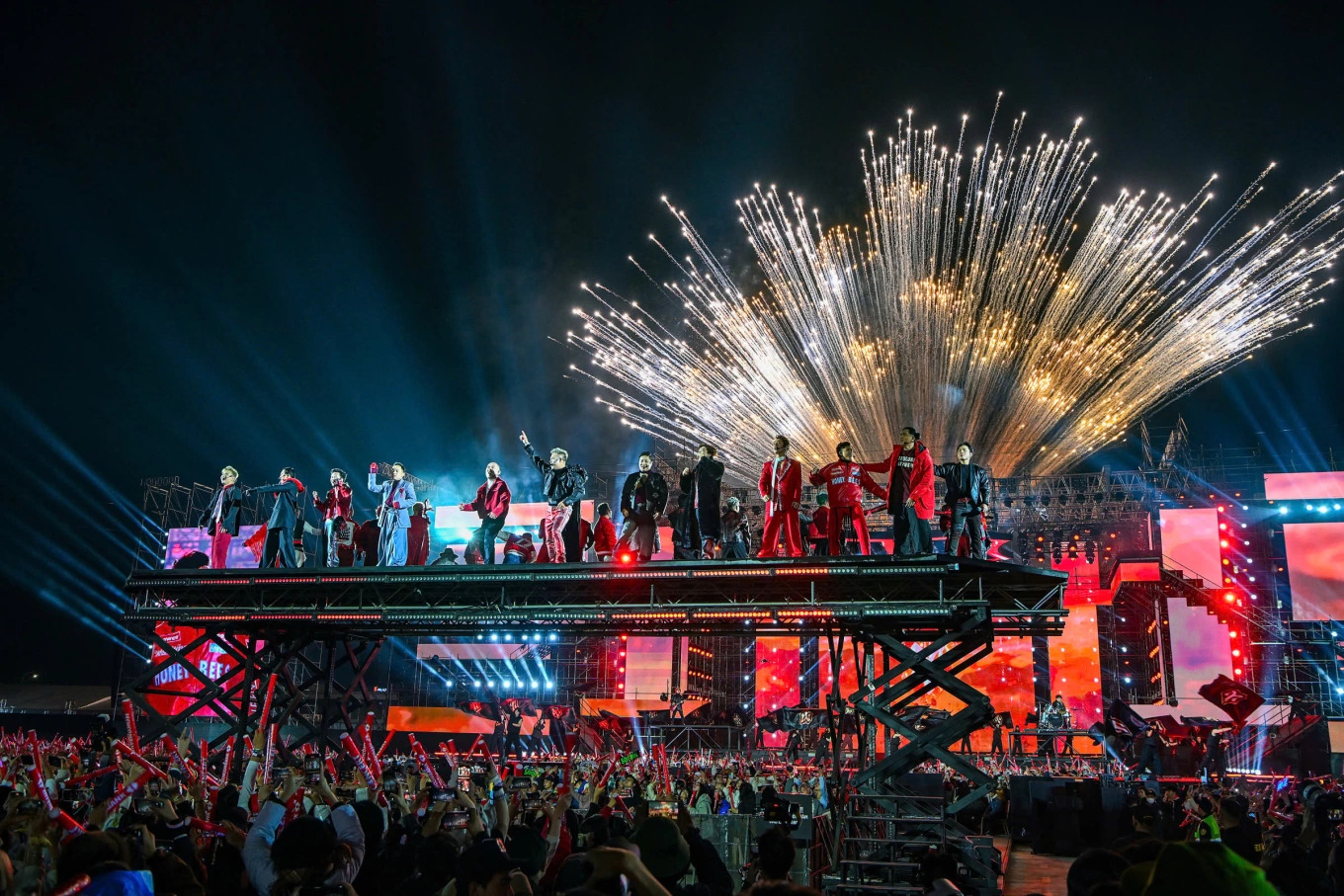
The "Anh Trai Vuot Ngan Chong Gai" concert in Hung Yen, December 14, 2025. Photo: vnexpress.net
Cultural diplomacy strategy and the positioning of Vietnam's national image
At the 11th National Party Congress, the concept of cultural diplomacy was incorporated into Party documents for the first time. The documents of the Congress affirmed the policy of “closely combining Party external relations with State diplomacy and people-to-people diplomacy; political diplomacy with economic diplomacy and cultural diplomacy; and external relations with defence and security” (2).
In Party documents adopted in subsequent terms, cultural diplomacy has been identified as one of the key tasks of external relations, closely linked to the promotion of national strength and the aspiration for development. The Political Report of the 13th Central Committee submitted to the 14th National Party Congress also emphasised the need to “enhance the effectiveness of cultural, defence and security diplomacy, while giving greater attention to activities that promote the image of Vietnam and its people abroad”(3).
The foreign policy of independence, self-reliance, multilateralisation, diversification, and proactive and active international integration is implemented simultaneously through all three pillars: Party external relations, State diplomacy, and people-to-people diplomacy. Cultural factors run throughout and are interwoven across all three pillars.
The State has emphasised the need to closely link the development of Vietnamese culture and people with national branding and the promotion of the country's image, regarding this not merely as the responsibility of the diplomatic or cultural sectors, but as a shared task of the entire political system, the business community, social organisations, and every citizen.
From the perspective of cultural diplomacy, Vietnam’s national image is built around several key pillars:
First, Vietnam as a peace-loving, independent, self-reliant, and responsible nation. Its active participation in regional and international mechanisms, contributions to peacekeeping operations, climate change response, and sustainable development have reinforced the image of a proactive, trustworthy, and responsible member of the international community.
Second, Vietnam as a nation with a rich cultural identity and longstanding traditions. Its abundant tangible and intangible cultural heritage, many elements of which have received international recognition, together with vibrant and diverse community cultural activities, constitute valuable resources for cultural diplomacy.
Third, Vietnam as a safe, friendly, and attractive destination. Beautiful natural landscapes, diverse cuisine, hospitable people, and competitive travel costs have contributed to the country's image as a destination well worth exploring and experiencing.
Fourth, Vietnam as a dynamic nation undergoing rapid development, participating in global value chains, and advancing the digital economy, green economy, and creative economy. This image has become increasingly evident through the achievements of Vietnamese enterprises, products, artists, athletes, scientists, and designers who have made their mark regionally and globally.
The mission of cultural diplomacy is to connect these pillars, enabling international friends to gain a clearer understanding of the identity, values, and image of Vietnam and its people in the 21st century.
Cultural diplomacy is not a standalone activity; rather, it is integrated into political, economic, defence and security diplomacy, as well as tourism, education, science and technology, among other fields.
The state management body responsible for foreign affairs and international integration plays a coordinating and “orchestrating” role in connecting and aligning efforts across relevant ministries and sectors, including culture, sports and tourism, education and training, and science and technology. It also works with local authorities, which contribute cultural products, tourism offerings, local specialities and major events, alongside businesses, social organisations, artists, intellectuals, and the Vietnamese diaspora.
In particular, the involvement of press agencies, media outlets and both domestic and international social media platforms plays a highly significant role in this process.
With diplomatic agencies serving as the coordinating centre, this interconnected network creates an effective mechanism for cooperation, helping to avoid duplication of effort and fragmentation of resources while enabling more comprehensive cultural diplomacy campaigns with greater depth and wider influence.
Some typical activities in Vietnam’s cultural diplomacy
First, promoting tangible and intangible cultural heritage
One of the most prominent and effective activities of Vietnam’s cultural diplomacy is heritage diplomacy through the promotion of tangible and intangible cultural heritage recognised by the United Nations Educational, Scientific and Cultural Organisation (UNESCO). To date, Vietnam has nine UNESCO World Heritage Sites(4), namely the Complex of Hue Monuments, Ha Long Bay, Hoi An Ancient Town, My Son Sanctuary, Phong Nha - Ke Bang National Park, the Central Sector of the Imperial Citadel of Thang Long - Hanoi, the Ho Dynasty Citadel, the Yen Tu - Vinh Nghiem - Con Son, Kiep Bac Complex of Monuments and Landscapes, and the Trang An Landscape Complex, and 17 elements of intangible cultural heritage recognised by UNESCO(5) including Hue Royal Court Music, the Cultural Space of Gong Culture in the Central Highlands, Bac Ninh Quan Ho Folk Songs, Ca Tru Singing, Xoan Singing, Southern Amateur Music (Don Ca Tai Tu), the Worship of Hung Kings, Nghe Tinh Vi, Giam Folk Songs, Tugging Rituals and Games, and the practices related to Mother Goddess worship.
Each heritage dossier is the result of a meticulous process of multilateral diplomatic advocacy, involving close coordination among domestic agencies, Vietnam’s Permanent Delegation to UNESCO, and members of the World Heritage Committee. This rich heritage system constitutes a significant reservoir of content for the continued advancement of cultural diplomacy. The organisation of Vietnam Culture Weeks, Vietnam Days Abroad, festivals, exhibitions, and artistic programmes showcasing these heritage values has helped bring the image of Vietnam to international audiences through vivid and emotionally engaging experiences.
Second, cultural diplomacy through major international events
Another notable dimension of Vietnam’s cultural diplomacy is its participation in and hosting of major international events, thereby “bringing Vietnam to the world” and “bringing the world to Vietnam”. At World Expos such as Shanghai 2010, Milan 2015, Dubai 2020, and Osaka 2025, Vietnam has established national pavilions with distinctive themes, showcasing cultural heritage, national images, creative products, and cuisine. These events attract tens of millions of visitors during each edition. They provide a direct channel through which international audiences can “experience” Vietnam through their senses rather than solely through abstract political and economic information.
Conversely, Vietnam’s hosting of events such as the Hue Festival, the Hanoi International Film Festival, and international festivals in the fields of arts, photography, and fine arts has also become a hallmark of cultural diplomacy. In recent years, each Hue Festival has attracted approximately 200,000 to 300,000 visitors, including tourists and artistic delegations from dozens of countries. Major externally focused events such as APEC Vietnam 2017 and the 31st SEA Games were accompanied by a series of artistic performances, street festivals, light shows, and culinary events, conveying the image of a peaceful, friendly, innovative, and culturally rich Vietnam. Such activities have generated a “soft effect” in enhancing the country’s image and standing. Every major event provides an opportunity for Vietnam to introduce its people, culture, and national identity to the world.
The integration of political diplomacy with cultural and artistic activities during high-level visits has also created moments of “soft diplomacy”, reinforcing the image of a friendly, sincere Vietnam that values goodwill and partnership.
Third, cultural diplomacy through contemporary arts, cinema, music, and cuisine
An increasingly prominent direction of Vietnam’s cultural diplomacy involves contemporary arts, cinema, music, and cuisine, creating “soft gateways” that “connect” directly with international audiences.
In the field of contemporary art, many Vietnamese painters, installation artists, photographers, and performance artists have participated in international biennales(6) and art festivals across Europe, Asia, and North America. Through solo and group exhibitions at prestigious museums and galleries, attracting thousands of visitors, they have contributed to projecting Vietnam as a dynamic centre of creativity rather than merely a “land of heritage”.
In cinema, Vietnamese films are appearing with increasing frequency at international film festivals such as Busan, Berlin, Locarno, and Tokyo. Many have received awards and secured international distribution and broadcasting rights. “Vietnamese Film Weeks” organised in France, the Republic of Korea, Japan, the United States, and other countries by the Ministry of Culture, Sports and Tourism in coordination with Vietnamese diplomatic missions typically screen between five and ten films. Each screening often attracts hundreds of viewers and includes exchanges with directors and actors.
In the fields of music and cuisine, Vietnamese artistic troupes specialising in traditional music and dance, symphonic performances, water puppetry, and contemporary music have toured extensively abroad, participating in international music festivals and performing to tens of thousands of spectators during each tour. These performances have received positive coverage from local media.
Fourth, cultural diplomacy through promoting the role of overseas Vietnamese communities
A particularly important pillar of Vietnam’s cultural diplomacy is the role of overseas Vietnamese communities. At present, more than six million Vietnamese people live in over 130 countries and territories, more than 80% of whom reside in developed countries(7). With thousands of associations, Vietnamese community organisations, student associations, and business networks, they form a vast network of “people-to-people cultural ambassadors”, contributing naturally, consistently, and effectively to the dissemination of Vietnam’s image
Each year, Vietnamese communities in the United States, France, Germany, the Czech Republic, Russia, Australia, the Republic of Korea, Japan, and other countries organise hundreds of events celebrating Lunar New Year, the Mid-Autumn Festival, Hung Kings Commemoration Day, and Ao Dai Day. These events attract between hundreds and thousands of participants, including large numbers of local residents. Programmes commonly feature traditional music and dance performances, ao dai fashion showcase, culinary experiences, and folk games, enabling foreign audiences to engage directly with Vietnamese culture.
At the same time, weekend Vietnamese-language classes for second- and third- generation Vietnamese have been maintained in countries such as the United States, France, Germany, the Czech Republic, and Russia. These centres serve dozens or even hundreds of students and are often accompanied by educational activities on Vietnamese history, geography, and culture.
=========
(1) See: “Political Report of the 13th Party Central Committee at the 14th National Congress of the Communist Party of Vietnam”, Communist Review, No. 1,078, January 2026, p. 46.
(2) Documents of the 11th National Party Congress, National Political Publishing House, Hanoi, 2011, p. 139.
(3) See: “Political Report of the 13th Party Central Committee at the 14th National Congress of the Communist Party of Vietnam”. ibid., p. 53.
(4) See: “World cultural and natural heritage sites in Vietnam”, Policy and Life - news portal of the Vietnam News Agency, July 15, 2025, https://chinhsachcuocsong.vnanet.vn/ nhung-di-san-van-hoa-va-thien-nhien-the-gioi-tai-viet-nam/64581.html
(5) See: “17 UNESCO-inscribed heritage sites: A rich and extensive cultural heritage of the nation”, e-Portal of the Ministry of Culture, Sports and Tourism, December 12, 2025, https://bvhttdl.gov.vn/17-di-san-duoc-unesco-ghi-danh-nen-van-hoa-phong-phu-do-so-cua-dan-toc-20251212150617854.htm
(6) Cultural and artistic event held biennially.
(7) See: Trung Hung: “Promoting the role of the overseas Vietnamese community - a strategic resource for national development”, Nhan Dan Online, September 11, 2025, https://nhandan.vn/phat-huy-vai-tro-cong-dong-nguoi-viet-nam-o-nuoc-ngoai-nguon-luc-chien-luoc-cho-phat-trien-dat-nuoc-post907424.html


