

Enhancing the effectiveness of multilateral diplomacy to better protect human rights amid deepening international integration
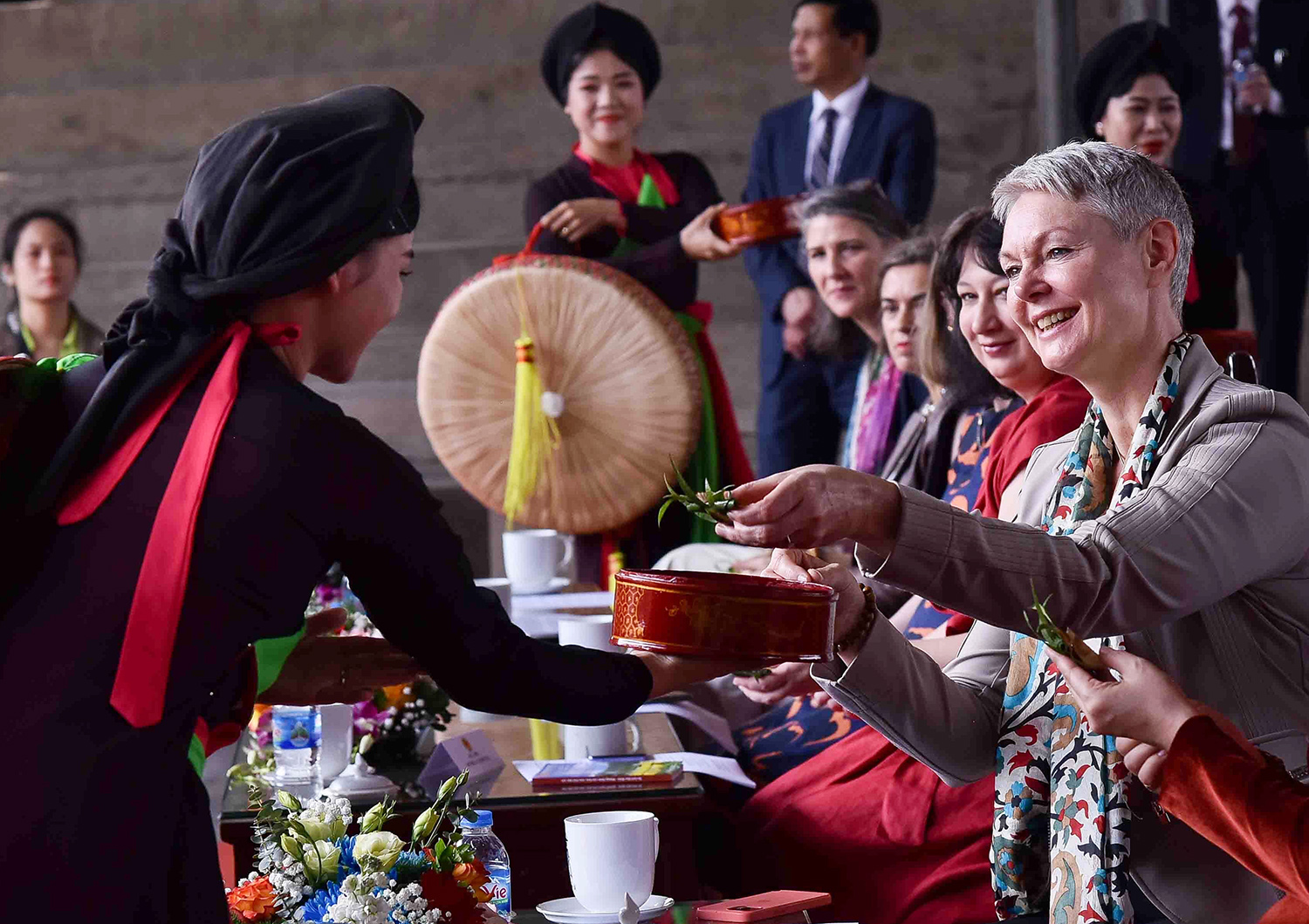
A female Quan ho folk singer invites female ambassadors and heads of foreign representative missions in Vietnam to enjoy a Bac Ninh Quan ho folk music performance Source: baoquocte.vn
Communist Review - Multilateral diplomacy has become one of the pillars of Vietnam’s foreign policy, contributing to safeguarding national interests, enhancing the country’s standing, promoting social progress and sustainable development. Since 2016, Vietnam has made clear advances in multilateral diplomacy in a spirit of respect, dialogue and cooperation in order to better ensure and protect human rights.
International context and Vietnam’s adaptation
In recent years, the global and regional situation has undergone rapid changes, with numerous “shocks” of a scale and impact unprecedented in several decades. Strategic competition among major powers has become increasingly intense, directly affecting the global security and development environment. The United Nations and multilateral mechanisms continue to play a key role in ensuring peace, security and development, yet they face considerable challenges. Globalisation, alongside its positive impacts, has also revealed certain negative effects, affecting the stability of many countries. Non-traditional security challenges have emerged strongly, particularly climate change, epidemics, energy security and food security. Trends in digital transformation, green transformation, the Fourth Industrial Revolution, especially the application of artificial intelligence (AI), have created opportunities for cooperation and growth, but have also posed challenges to the implementation of Vietnam’s multilateral diplomacy aimed at further strengthened the protection of human rights.
Many universal values upheld by international cooperation mechanisms are consistent with Vietnam’s current objectives regarding sustainable development, economic cooperation, climate change response and environmental protection... At the same time, the emerging “multipolar” order and the trend towards the democratisation of international relations have expanded the space for participation by society and the business community. In particular, cooperation mechanisms in the Asia-Pacific region, especially the Association of Southeast Asian Nations (ASEAN), continue to affirm their important role, with Southeast Asia regarded as a “bright spot” of peace, stability and development.
However, multilateral institutions, such as the United Nations, the World Trade Organisation (WTO), the World Health Organisation (WHO), together with many international organisations, are facing severe challenges since the end of the Second World War. Strategic competition among major powers has reduced effectiveness and narrowed the space for cooperation, making it increasingly difficult to identify feasible, balanced and consensus-based solutions. Many important global cooperation frameworks, such as the 2030 Agenda for Sustainable Development and the Paris Agreement on climate change (finalised at COP-26), have been implemented more slowly than required. At the same time, some major powers have increasingly tended to use international cooperation mechanisms to serve their national interests, showing readiness to withdraw from cooperative frameworks and even increasing pressure while reducing priorities and resources devoted to international cooperation.
Vietnam’s multilateral diplomatic achievements in a spirit of respect, dialogue and cooperation to better ensure and protect human rights
Protecting and promoting human rights constitute one of the core elements of Ho Chi Minh Thought and represent a consistent viewpoint of the Communist Party of Vietnam and the Vietnamese State. Since its establishment, the Communist Party of Vietnam has identified its supreme objective as securing independence and freedom for the nation and happiness and prosperity for the people. The 1945 Declaration of Independence affirmed Vietnam’s right to freedom and independence. The 2013 Constitution devotes a separate chapter to human rights and the fundamental rights and obligations of citizens. The Resolution of the 13th National Party Congress emphasised: “The people are at the centre and are the subject of the cause of renovation, national construction and defence; all guidelines and policies must genuinely originate from the requirements, aspirations and legitimate rights and interests of the people; strengthening the close bond with the people and relying on the people to build the Party; taking the happiness and prosperity of the people as the goal of endeavour; consolidating and strengthening the people’s confidence in the Party, the State and the socialist regime.” (1) Previously, the Resolution of the 12th National Party Congress had identified the task of: “Sustainably developing culture and society; closely and harmoniously combining economic development with cultural development and the implementation of social progress and justice, while improving people’s living standards. Implementing the United Nations 2030 Agenda and effectively integrating the Sustainable Development Goals into the socio-economic development plans of the country, each sector and each locality.” (2) Summarising a number of theoretical and practical issues concerning socialism and the path towards socialism in Vietnam, late General Secretary Nguyen Phu Trong affirmed: “People occupy the central position in the development strategy; cultural development and human development are both the objective and the driving force of the renovation process; development of education and training and science and technology is a top national policy; environmental protection is one of the vital issues and a criterion for sustainable development; building happy and progressive families as healthy and solid cells of society, and achieving gender equality, are criteria of progress and civilisation.” (3)
Since 2016, the Communist Party of Vietnam and the Vietnamese State have continuously improved policies, legislation and institutions to promote human rights, citizens’ rights and socio-economic development. The socio-economic achievements attained during this period have created conditions for the country to ensure the enjoyment of fundamental rights, social welfare and development outcomes for all people, especially vulnerable groups. This reflects the humanitarian nature and consistent policy of the Party and the State in promoting the people’s role as masters of the country and caring for their well-being and happiness. Significant and comprehensive achievements have been made in ensuring human rights across many fields(4), creating a practical foundation for effectively advancing Vietnam’s multilateral diplomacy in a spirit of respect, dialogue and cooperation aimed at further strengthening the protection of human rights.
First, the material and spiritual lives of the people have continued to improve. After 40 years of renovation, from a country suffering the severe consequences of war and subjected to political isolation and economic embargoes for three decades, Vietnam has emerged as a role model in implementing the United Nations Millennium Development Goals (MDGs) and as an example of post-war reconciliation and reconstruction. In 2023, Vietnam’s Human Development Index (HDI) reached 0.766, placing it among countries with high human development and ranking 93rd out of 193 countries and territories(5).
Second, children are cared for, nurtured and guaranteed adequate conditions for attending school; the study promotion movement has been implemented nationwide; and the national education system continues to develop towards building a learning society. To date, Vietnam has universalised preschool education for five-year-old children; the enrolment rate of primary school pupils at the appropriate age has reached 99.7%; and the rate of students completing lower secondary education has reached 90.7%(6). Beginning with the 2025-2026 academic year, the policy of exempting tuition fees for students from preschool to the end of public high school education nationwide has been established. This major policy has received broad social consensus, demonstrating the superiority of the system and the consistent commitment of the Party and the Vietnamese State to developing the education system, and is expected to improve the quality of general education and the quality of national human resources.
Third, young people and citizens of working age have increasingly greater opportunities for employment, thereby not only improving their own lives and those of their families but also directly contributing to national development. As of the second quarter of 2025, as many as 52 million had been employed nationwide, accounting for 97.2% of the labour force aged 15 and above(7).
Fourth, older persons receive increasing attention and comprehensive care; and policies of gratitude towards war invalids, martyrs and persons with meritorious services to the revolution have been effectively implemented. The average life expectancy of Vietnamese people increased from 65.5 years in 1993 to 74.6 years in 2024, exceeding the global average of 73 years(8). Since July 2024, Vietnam has increased by a further 35.7% the standard preferential allowance for persons with meritorious services to the revolution, with total annual expenditure on preferential allowances and subsidies for this group amounting to approximately 35.63 trillion VND(9).
Fifth, Vietnam has been recognised by the international community as one of the exemplary countries achieving significant progress in hunger eradication and poverty reduction. By the end of 2024, the nationwide multidimensional poverty rate (including poor and near-poor households) stood at 4.06%(10). At present, social assistance is provided to nearly 3.8 million people (approximately 3.38% of the population); and monthly care support is provided to 389,000 households. Total annual expenditure on social assistance amounts to approximately 32 trillion VND(11). During the COVID-19 pandemic, Vietnam implemented a large-scale support package for its population and was recognised as one of the five countries with the highest vaccine coverage rates in the world. At the same time, a nationwide programme to eliminate all temporary and dilapidated houses was implemented and completed in 2025.
Sixth, gender equality continues to receive attention and has achieved notable progress. According to the World Economic Forum (WEF) Global Gender Gap Report, Vietnam’s Gender Equality Index improved significantly, rising from 87th place in 2021 to 72nd out of 146 countries in 2024(12), thereby affirming Vietnam’s efforts and commitment to promoting equal rights and opportunities for women and men.
Seventh, the people live in peace and stability; national independence and sovereignty are firmly maintained; and political security and social order are guaranteed. Citizens fully enjoy democratic freedoms, freedom of religion and belief, freedom of the press, access to information, creativity and equality before the law. According to the World Happiness Report 2025 of the Sustainable Development Solutions Network (SDSN), Vietnam ranked 46th, marking a significant improvement from 65th place in 2023 and 54th place in 2024(13). According to global rankings on the Sustainable Development Goals (SDGs), Vietnam’s score increased from 57.6 points in 2016 to 73.4 points in 2025 (on a 100-point scale), an increase of approximately 27.4% over nearly a decade(14).
Eighth, Vietnam served as an active member of the United Nations Human Rights Council for the 2023-2025 term and was subsequently elected to continue serving for the 2026-2028 term, thereby further affirming its role and position in multilateral cooperation on human rights. The issuance of Directive No. 25-CT/TW, dated August 8, 2018, by the Party Central Committee Secretariat, “On promoting and elevating multilateral diplomacy to 2030” (hereinafter referred to as Directive No. 25-CT/TW), defined multilateral diplomacy as an important strategic orientation and an effective means of implementing foreign policy, bringing about a strong transformation in thinking and action, from “participation” to “proactive engagement”, “proactive contribution to building and shaping common rules”, and “striving to play a core, leading and mediating role in multilateral forums and organisations of strategic significance to the country, in line with specific capabilities and conditions”. Among its key tasks, Directive No. 25-CT/TW emphasises the requirement to “actively assume responsibilities and stand for election to leadership and executive bodies of multilateral mechanisms”. On that basis, multilateral diplomacy in general, including in the field of human rights, has been effectively implemented, adapting to international developments, contributing to safeguarding and promoting Vietnam’s strategic interests in security and development, while affirming the spirit of being a “responsible member of the international community”. Vietnam’s multilateral diplomatic activities have achieved many practical results, ranging from substantive contributions at regional and international forums, deepening bilateral relations with partners, participating in addressing global issues, to shaping orientations and tasks for multilateral diplomacy in the new era of national development.
On October 11, 2022, the United Nations General Assembly elected Vietnam as a member of the United Nations Human Rights Council for the 2023-2025 term. Following its successful tenure as a non-permanent member of the United Nations Security Council for the 2020-2021 term and as ASEAN Chair in 2020, this marked an important milestone in implementing the foreign policy line of the 13th National Party Congress and Directive No. 25-CT/TW. On October 14, 2025, Vietnam was again elected by the United Nations General Assembly as a member of the United Nations Human Rights Council for the 2026-2028 term. This event affirmed Vietnam’s growing international standing and reputation, while also reflecting the international community’s recognition of Vietnam’s policies, efforts and achievements in ensuring and protecting human rights.
Building upon the initiatives and achievements attained during its tenure as a member of the United Nations Human Rights Council for the 2014-2016 term, Vietnam has continued to serve as a responsible, proactive and active member in numerous multilateral human rights forums. These include the Committee on Non-Governmental Organisations of the Economic and Social Council (ECOSOC), the United Nations General Assembly’s Committee on Social, Humanitarian and Cultural Issues (the Third Committee), the Commission for Social Development (CSocD), the Commission on Narcotic Drugs (CND), and regional mechanisms within the ASEAN framework.
At the United Nations Human Rights Council, Vietnam has played a proactive role in the formulation of resolutions, leaving a distinct mark. These initiatives reflect the integration and harmonisation of Vietnam’s priorities with common human rights values, in line with the country’s specific conditions, while also contributing to enhancing its international standing and prestige. In March 2023, at the 52nd regular session of the United Nations Human Rights Council held in Geneva (Switzerland), Vietnam chaired and led a core group of 14 countries(15) from different regions and with varying levels of development to draft and hold consultations, enabling the Human Rights Council to adopt by consensus Resolution 52/19 commemorating the 75th anniversary of the Universal Declaration of Human Rights (UDHR) and the 30th anniversary of the Vienna Declaration and Programme of Action (VDPA), with the co-sponsorship of 121 countries(16). The initiative helped convey a meaningful message and strengthened the international community’s resolve to implement the principles and objectives of promoting and protecting human rights as affirmed in the two aforementioned documents; at the same time, it underscored the role of the Human Rights Council and the United Nations human rights mechanisms. The resolution emphasised the nation’s primary role in ensuring human rights, affirmed women’s participation, the value of international cooperation and solidarity, as well as the principle of respecting diversity and inclusiveness in the promotion and protection of human rights.
Since 2015, the core group on climate change and human rights, comprising Vietnam, the Philippines and Bangladesh, has regularly submitted draft resolutions on the protection and promotion of human rights in the context of climate change to the United Nations Human Rights Council. The resolutions have focused each year on specific themes, such as the right to health (2015), children’s rights (2016), the rights of migrants (2017), women’s rights (2018), the rights of persons with disabilities (2019), the rights of older persons (2020), the rights of vulnerable groups (2021), the right to food (2022), climate change and livelihoods (2023), just transition in responding to climate change (2024), and equitable and effective access to climate finance (2025). Among them, two resolutions drafted and promoted by Vietnam (Resolution A/HRC/RES/47/24(17) and Resolution A/HRC/RES/56/8(18)) achieved important outcomes, contributing to institutionalising discussions, strengthening reporting, and elevating the priorities of the United Nations and the United Nations Human Rights Council regarding the protection of human rights when responding to climate change. Notably, these resolutions incorporated several guiding concepts originating in Vietnam’s documents, while also integrating numerous elements aimed at protecting the interests of developing countries heavily affected by climate change into official United Nations documents.
In July 2025, at the 59th session of the United Nations Human Rights Council held in Geneva (Switzerland), Vietnam, together with Saudi Arabia, Algeria, Azerbaijan, Kuwait and Pakistan, introduced for consensus adoption Resolution A/HRC/RES/59/23 on “Enhancing international cooperation, technical assistance and capacity-building to strengthen national frameworks for protecting and empowering children in cyberspace” (19). The successful adoption of this resolution reflects the growing concern of the international community regarding the challenges and risks children face in cyberspace, while also affirming Vietnam’s role and image in addressing a transnational human rights issue. The resolution highlights the importance of the United Nations Convention against Cybercrime, signed in Hanoi in October 2025 (the Hanoi Convention).
Promoting and protecting human rights is a common aspiration of humankind; however, the protection and promotion of human rights must take into account the specific context and conditions of each country, on the basis of the principles of the United Nations Charter and international law. Therefore, this field has always been characterised by diverse approaches and perspectives, stemming from each country’s values, ideologies, institutions, historical conditions and particular interests. In practice, there remain countries and international organisations whose assessments of human rights issues are not always comprehensive.
With regard to human rights, Vietnam has chosen a constructive and flexible approach; listening to and respecting the needs for cooperation and technical assistance, promoting dialogue to seek appropriate solutions, and striving for positive and substantive improvements in the enjoyment of human rights globally, in accordance with the specific conditions of each country and the universal values of human rights.
Vietnam participates fully, responsibly and actively in the Universal Periodic Review (UPR) mechanism as well as in international human rights treaties to which it is a party. Since 2016, Vietnam has consistently supported and seriously implemented the UPR - a mechanism that promotes dialogue and cooperation on the basis of transparency and equality within the framework of the United Nations Human Rights Council. Vietnam’s UPR national reports have all been adopted by consensus and have received widespread recognition and high appreciation from many countries. In recent years, the international community particularly welcomed Vietnam’s presentation and dialogue on its fourth-cycle UPR national report on the occasion of the 70th anniversary of the Dien Bien Phu Victory (May 7, 1954 - 2024) and the signing of the Geneva Accords on the Restoration of Peace in Indochina - a historic milestone affirming the nation’s aspiration for independence and freedom, and the people’s happiness, while also laying the foundation for the protection and promotion of human rights in Vietnam. In each UPR cycle, Vietnam issues a comprehensive plan for implementing the accepted recommendations, with clear assignment of responsibilities to ministries, agencies and sectors.
Vietnam actively prepares national reports and issues implementation plans for the recommendations of treaty bodies, as well as important international instruments to which it is a party, notably the International Convention on the Elimination of All Forms of Racial Discrimination (CERD), the International Covenant on Civil and Political Rights (ICCPR), the Convention against Torture (CAT), and the Convention on the Rights of Persons with Disabilities (CRPD)... With meticulous preparation and comprehensive, in-depth content, Vietnam’s national reports have consistently been highly appreciated by treaty bodies and cited by many countries as useful experiences.
Strategy for ensuring and protecting human rights associated with multilateral diplomacy in the coming period
The achievements in ensuring and promoting human rights since 2016 have demonstrated Vietnam’s strong commitment and persistent efforts in the field of human rights. However, the country continues to face challenges arising both from its specific national circumstances and from global developments. In the coming period, efforts to protect and promote human rights in conjunction with multilateral diplomacy are expected to help position Vietnam within the development trajectory of the era, effectively supporting its rise in the new era. To realise this objective, Vietnam needs to implement strategic orientations in a synchronised manner. Politburo Resolution No. 59-NQ/TW, dated January 25, 2025, on “International integration in the new situation”, identifies comprehensive and synchronised international integration, with people at the centre, while shifting from participation to proactive engagement and gradually shaping multilateral “rules of the game”. The implementation of Resolution No. 59-NQ/TW provides an strategic basis for linking national development priorities with international human rights standards, thereby safeguarding national interests in the context of deep international integration and intensifying strategic competition.
First, continuing to prioritise the building of a socialist rule-of-law State in Vietnam, improving the legal and policy framework and strengthening resources for sustainable and inclusive development; promoting democracy and enhancing the effectiveness of the socialist rule-of-law State; and examining the incorporation of international human rights commitments into the national legal system in accordance with the universal values of human rights.
Second, strengthening measures, policies and resources to better ensure human rights in fields consistent with the universal values of human rights; improving the provision of public services, accelerating administrative reform, effectively implementing green and digital transformation strategies, enhancing people’s access to information, and promoting the development of journalism and communications.
Third, fully implementing the Sustainable Development Goals (SDGs), while expanding the social security system, reducing inequality, and ensuring the enjoyment of fundamental rights by vulnerable groups. Attention should be paid to narrowing development gaps among regions and population groups, advancing multidimensional poverty reduction, and supporting sustainable livelihoods for people.
Fourth, raising awareness among cadres, civil servants, the business community and the public regarding human rights, especially international human rights treaties and documents to which Vietnam is a party.
Fifth, strengthening cooperation with countries, United Nations mechanisms and regional organisations on human rights on the basis of equality, respect for international law and non-interference in internal affairs, while enhancing capacity-building and technical assistance to safeguard people’s interests and improve their enjoyment of human rights.
Sixth, enhancing Vietnam’s role as a member of the United Nations Human Rights Council, thereby advancing the priorities of developing countries, particularly in gender equality, the protection of vulnerable groups, and responses to non-traditional security challenges such as climate change and food security, as well as strengthening the protection of rights related to labour, health and healthcare.
Overall, building on previous foundations, since 2016 Vietnam’s multilateral diplomacy, grounded in respect, dialogue and cooperation with the aim of further promoting and protecting human rights, has been implemented in a comprehensive and synchronised manner, with many importatnt advances, elevating both its quality and scope. It has gradually contributed to the formation of global multilateral “rules of the game”, closely linking to issues of security, development and the country’s socio-economic development process. Multilateral diplomatic activities have helped affirm Vietnam’s international standing and prestige, promoting the enjoyment of human rights not only domestically but also internationally, while ensuring compatibility with the universal values of human rights and with the conditions and development paths of individual countries. Nevertheless, Vietnam still needs to make greater efforts to overcome numerous challenges and continue improving the quality and effectiveness of multilateral diplomacy in order to better promote and protect human rights, harness soft power, and strongly demonstrate the image of an independent, self-reliant, peaceful, cooperative, friendly and developing nation; and become “a role model of peace and sustainable development”, making positive contributions to enhancing the voice and role of developing countries(20), and further improving social welfare while protecting human rights and citizens’ rights in the new era, the era of the Vietnamese nation’s rise.
———————————-
*Department of International Organisations, Ministry of Foreign Affairs
(1) Documents of the 13th National Party Congress, National Political Publishing House, Hanoi, 2021, Vol. I, pp. 96 - 97.
(2) Documents of the 12th National Party Congress, Party Central Committee Office, 2016, Hanoi, pp. 299 - 300.
(3) Nguyen Phu Trong: “Some theoretical and practical issues on socialism and the path towards socialism in Vietnam”, Communist Review, No. 966, May 2021, p. 9.
(4) See: “Prime Minister Pham Minh Chinh chairs national conference on human rights education”, Government News, December 11, 2024, https://baochinhphu.vn/thu-tuong-pham-minh-chinh-chu-tri-hoi-nghi-toan-quoc-ve-giao-duc-quyen-con-nguoi-102241212081332109.htm
(5) Nhat Anh: “Vietnam maintains high Human Development Index”, Nhan Dan Online, May 7, 2025, https://nhandan.vn/viet-nam-duy-tri-chi-so-phat-trien-con-nguoi-o-muc-cao-post877966.html
(6) Phuong Ha: “Ten years of implementing Resolution No. 29: Renewal momentum spreading throughout education sector”, Vietnam Journal of Education, November 27, 2023, https://tapchigiaoduc.edu.vn/article/88221/211/10-nam-thuc-hien-nghi-quyet-29-tu-tuong-khi-the-doi-moi-da-di-sau-vao-toan-nganh-giao-duc/
(7) See: “Press release on labour, employment situation in Q2 and H1 of 2025”, National Statistics Office, https://www.nso.gov.vn/du-lieu-va-so-lieu-thong-ke/2025/07/thong-cao-bao-chi-ve-tinh-hinh-lao-dong-viec-lam-quy-ii-va-6-thang-dau-nam-2025
(8) See: “Life expectancy increases, fertility declines, accelerating population ageing in Vietnam”, Population Department Portal, Ministry of Health, 2025, https://vnpa.moh.gov.vn/tin-tong-hop/tuoi-tho-tang-nguoi-dan-sinh-it-day-toc-do-gia-hoa-dan-so-viet-nam-them-nhanh
(9) Ngan Anh: “Over 5.3 trillion VND added for preferential allowances and subsidies for people with meritorious services in 2024”, Nhan Dan Online, July 5, 2024, https://nhandan.vn/nam-2024-tang-hon-5300-ty-dong-thuc-hien-tro-cap-phu-cap-uu-dai-voi-nguoi-co-cong-post817610.html
(10) Decision No. 217/QD-BLDTBXH dated February 4, 2024 of the Ministry of Labour, Invalids and Social Affairs promulgating the results of the 2024 review of poor and near-poor households under the multidimensional poverty standards for the 2022 - 2025 period.
(11) Thuy Truc: “Nearly 3.8 million people receive social assistance”, Kinh te & Do thi Online, October 30, 2024, https://kinhtedothi.vn/gan-3-8-trieu-nguoi-duoc-huong-tro-cap-xa-hoi.html
(12) “Preliminary review session on Government report on implementing national gender equality targets in 2024”, Ministry of Home Affairs Portal, April 4, 2025, https://moha.gov.vn/tin-tuc---su-kien/tin-hoat-dong-cua-bo-noi-vu/phien-hop-tham-tra-so-bo-bao-cao-cua-chinh-phu-ve--d610-t57031.html
(13) “Vietnam records remarkable improvement in Happiness Index”, Government News, March 20, 2025, https://baochinhphu.vn/viet-nam-tang-vuot-bac-ve-chi-so-hanh-phuc-102250320112059904.htm
(14) Viet Linh: “Vietnam ranks second in Southeast Asia in sustainable development index”, Tien Phong Online, August 22, 2025, https://tienphong.vn/viet-nam-dung-thu-2-dong-nam-a-ve-chi-so-phat-trien-ben-vung-post1771519.tpo
(15) Vietnam, Austria, Bangladesh, Belgium, Bolivia, Brazil, Chile, Costa Rica, Fiji, India, Panama, Romania, South Africa and Spain.
(16) United Nations Human Rights Council: “Resolution A/HRC/RES/52/19”, United Nations General Assembly, April 6, 2023, https://docs.un.org/en/A/HRC/RES/52/19
(17) United Nations Human Rights Council: “Resolution A/HRC/RES/47/24”, United Nations General Assembly, July 26, 2021, https://docs.un.org/en/A/HRC/RES/47/24
(18) United Nations Human Rights Council: “Resolution A/HRC/RES/56/8”, United Nations General Assembly, July 16, 2024, https://docs.un.org/en/A/HRC/RES/56/8
(19) United Nations Human Rights Council: “Resolution A/HRC/RES/59/23”, United Nations General Assembly, July 10, 2025, https://docs.un.org/en/A/HRC/RES/59/23
(20) Pham Van Tiep: “UN Secretary-General: Vietnam a role model of peace and sustainable development”, VietnamPlus, June 10, 2025, https://www.vietnamplus.vn/tong-thu-ky-lhq-viet-nam-la-hinh-mau-cua-hoa-binh-va-phat-trien-ben-vung-post1043350.vnp


